Why I'm Writing This
Years ago I started working on a leadership book based on my professional experience. Due to a lot of boring reasons like a global pandemic and moving continents, I shelved the work and honestly abandoned the project.
When I picked it back up in late 2025, I realized what really felt more valuable in this moment was something with more immediacy. I wanted to write something people could actually use right now and not just aspirational theory for someday.
Here's what pushed me to finally finish it – I kept having the same conversation over and over again. A friend would text: "I got laid off." Another would DM: "I'm in the final round of interviews for the third time this year and nothing." Someone I know with an incredibly successful production company or legacy boutique agency: "The things I was doing before aren't working anymore."
And every time, my answer was the same. You need to stop applying to jobs or working on pitches and you need to start calling your friends.
The pattern became impossible to ignore over the past year. Layoffs, AI disruption, career uncertainty — 2025 wasn't a blip, it was structural. I watched incredibly talented people leave the workforce, not because they wanted to, but because the systems they were taught to trust had failed them. Job boards were full of ghost postings. Hiring processes were false process. And meanwhile, every single job I got, every business I built, every opportunity that mattered — it all came to me through relationships.
So I decided to stop having the same conversation one person at a time and write down everything I know about how work actually works. Not how it's supposed to work or the fake version people share on LinkedIn. But the real system — the one that people with privilege access naturally, but the rest of us have to build intentionally.
As a friend once said, "Most business books could really be business essays." Work Friends isn't meant to be read like a business book and then shelved away to collect dust. Think of it less like a philosophy and more like an operating system for growth — who you prioritize, how you build relationships, and how opportunity compounds. This is the system I've been running for 20 years. It got me from a DIY band to executive roles at The Webbys, Verizon and Purpose. It's what I used to launch and scale new brands and businesses. And it's what I use today working with clients globally.
I don't know what the future will hold. But if you're navigating uncertainty, rebuilding after a layoff, or trying to grow a business without resorting to sales tactics that make you cringe, then this is for you.
Foreword
Work Friends is a relationship-led growth system for turning trust, community, and reputation into sustainable business growth.
The best work happens through people — when someone you know vouches for you, introduces you, and wants to work with you. That isn't random or luck, it's infrastructure. And you build it by creating value for others first. Work Friends is built on a simple premise: being a host is better than pitching yourself. Building a community is better than networking.
In my 20s, I was in a DIY band in NYC. We ran our own label, booked international tours, did our own press, and built a global following without industry gatekeepers. When I moved into business, I realized the same rules applied. But no one was naming them, teaching them, or systematizing them.
This framework is for founders, operators, and creatives who want better clients, stronger partnerships, and more meaningful work without becoming sales machines. Instead of pushing harder, you'll learn how to host better — build rooms, create value early, earn trust organically, and turn relationships into long-term growth engines. No transactional networking or marketing. Just real connection, designed strategically.
Rooted in community-building, creative ecosystems, and years of scaling ventures across culture, tech, media, and impact, Work Friends delivers practical frameworks, playbooks, and systems for building credibility, partnerships, events, and compounding opportunity — so growth feels human, sustainable, and aligned with how great businesses are actually built.
This book could also be called, Everything I Know, I learned in a DIY band.
Introduction
Build relationships. Build business.
Most career and business advice starts with the same tired assumption that growth comes from pushing harder and working more. You know the drill — we need more leads! Send more emails! Buy more retargeting ads for anyone who visited our website in the past 30 days!
But if you've ever really built anything from scratch — it could be a company, a community, a creative project or a movement — you already know that's not how the best work actually happens.
The best work happens through people.
It happens when people work together through trust, proximity, shared experience, and timing. It happens because someone knows you, vouches for you, introduces you, or simply says, "They get it." Some people would call that luck. Others would call it privilege. But if you build that with purpose & intention then it turns into infrastructure for sustainable business growth.
This is the foundation of Work Friends.
Your relationships are not random or a side thought – they are your business strategy. And as such, they need to be cultivated and maintained not just when you need something from them but with an ongoing cadence that's meaningful.
Recognizing this shift changes everything. And while tons of things in life are unfair, this strategy reveals a growth engine that's entirely within your control to build.
What a Time to Be Alive
2026 presents a very specific moment. Layoffs, AI disruption, and career uncertainty aren't a blip — they're structural. AI is likely going to do to white-collar work what globalization did to blue-collar jobs and it will permanently reshape what work looks like, which roles exist, and how people earn a living. Many of these jobs aren't coming back and that means we're entering an era of mass first-time entrepreneurship, fractional careers, portfolio work, and people building their own lanes out of necessity, not aspiration. In moments like this, the most valuable asset isn't a resume, a funnel, or a job board — it's your personal relationships. Community becomes infrastructure and operating system. And your ability to build trust, reputation, and opportunity through people becomes the only real safety net.
It Takes a Village
I also want to name something that I see happening right now. I know so many incredibly talented and brilliant women right now who are out of work and who are embarrassed to say it or scared to ask for help. Why do we feel more comfortable asking strangers for jobs than asking our friends for support? Who is more likely to hire us — a stranger on the internet or someone who already knows you, trusts you, and values your work? This moment is not a personal failure. We're living through a once-in-a-generation technological shift. That's not a reflection of you or your worth. Please don't try to go through this alone. If you're navigating uncertainty, raise your hand, reach out and let people help you.
People Hire Their Friends
We all know this to be true. People hire people they trust, respect, and want to work with. Countless books, articles and podcasts have been dedicated to the topic. So why don't we build our career and business systems around this reality?
In every leadership role I've held and every business I've built, the pattern was the same. If we didn't have a personal relationship with the decision-maker, we almost never won the work or got the job. The deals that closed fastest, lasted longest, and created the most value all came through relationships, not pitches.
And yet while everyone knows this, when it comes to business we do the opposite. Most organizations treat relationships like a side thought or a nice-to-have. Or something that lives inside one person's individual network instead of inside the business itself.
Relationships are core infrastructure for the future of work. Community is not a tactic but your operating system.
How This Actually Works
I talk about this at some length in the companion guides I call Unsolicited Advice, but let me show you one example of what this looks like in practice.
There is one job that I did actually get through a formal application process. I won't say which one. I got a text from a friend about the opportunity and then I saw the posting on LinkedIn about the opening. For once, I actually applied through the formal process. I filled out the application, submitted my resume, went through the interview rounds.
But one of my closest friends was close friends with the hiring manager. She had already vouched for me before I even hit submit. And on top of that, I had worked with the hiring manager's husband at a previous role years earlier.
I was certainly like 1 of 3 people who were uniquely qualified for that role. But having those relationships is I am sure what made me the stand out candidate.
That's the pattern I kept seeing everywhere. And that's what this framework is designed to help you build intentionally and repeatedly, over the course of your entire career or business.
Marketing is a *&^@ Word
For many founders and creative leaders, the word marketing can be a nasty 4 letter word. It has a negative connotation and you may feel like its something that can actually hurt or hinder the reputation of your business. Certain types of performance marketing tactics can be synonymous with manipulation, creating unnecessary noise, or shameless self-promotion. For a lot of values-driven founders and leaders, it just feels wrong. Not because they don't want growth, but because they don't want to feel inauthentic or extractive in the process of growing their business.
They want longer term partnerships, with deeper collaborations and more meaningful work. They want growth that feels human.
This Is Not Networking
I want to be transparent that I am not a personal brand guru. But what I do have is nearly twenty years of experience building professional relationships, communities, and businesses that last.
This is the same strategy I used to first build a DIY band, then to succeed in leadership roles inside major companies, and then to build my own business. This system turns genuine relationships into growth infrastructure without being awkward, fake, or extractive. These principles are what I built my career on, and what has worked consistently.
Less is More
Job seekers think they need to apply to hundreds of roles, and sales teams are told to send thousands of cold emails. You're running around going to speed networking and pinging people on LinkedIn with a hail mary email. But volume isn't the problem, relevance is. More noise doesn't create more opportunity; better targeting, stronger relationships, and clearer intention do. A handful of thoughtful connections will outperform a hundred generic outreach attempts every single time. The goal isn't to do more, it's to do what actually works.
You Don't Get Handed an Opportunity, You Create One
In my 20s, I was in a DIY band in NYC. My brother and I started a duo called "This Frontier Needs Heroes". We had our own record label, booked our own international tours, and did all of our own press. We recorded and distributed 3 albums, played at festivals for thousands and were globally recognized by major music outlets.
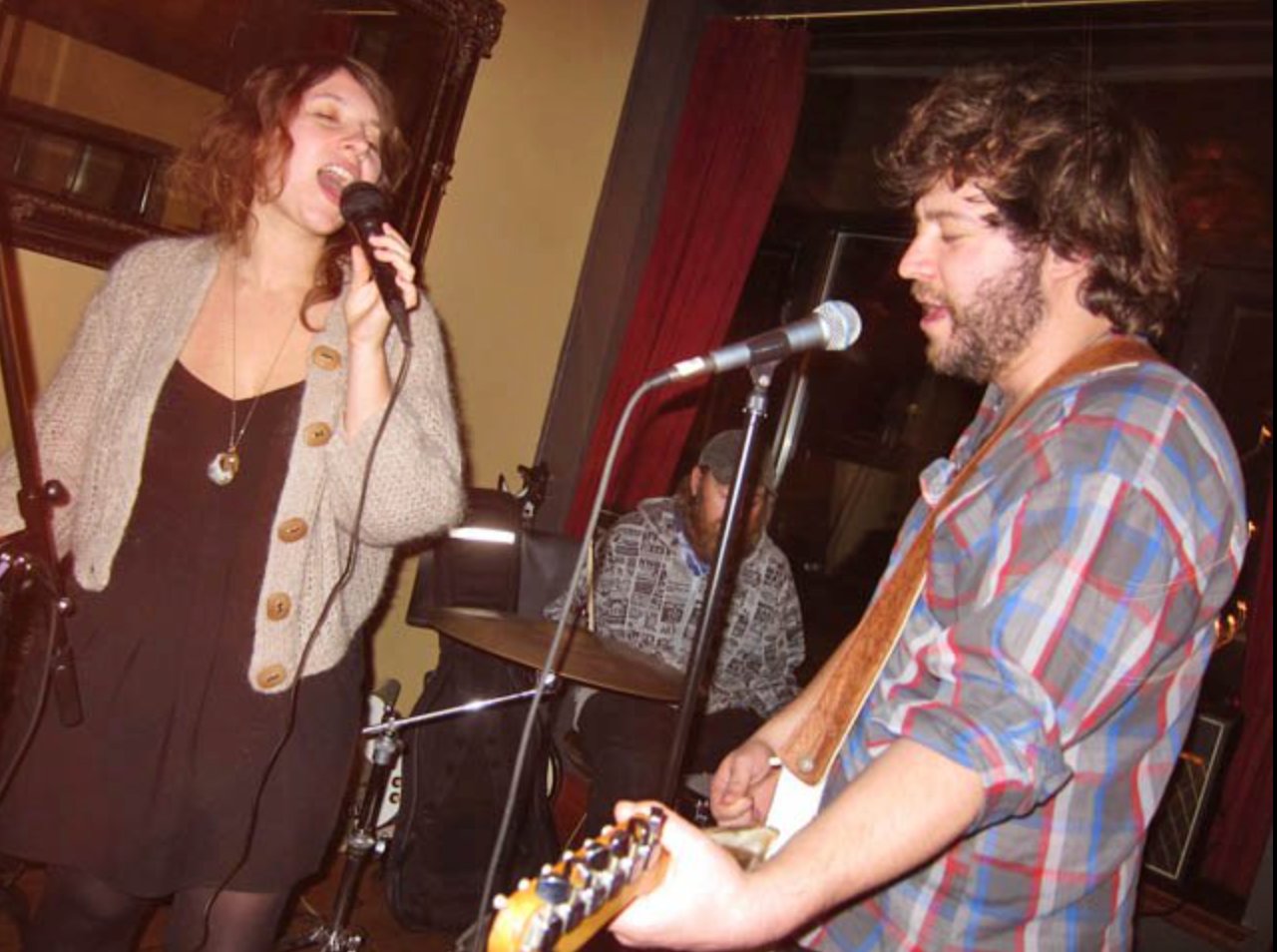
This Frontier Needs Heroes in Brooklyn, NY, 2006.
None of the opportunities we got were through the traditional music industry but by building our own community. We got them by starting our own music series and inviting people to play shows, collaborating with other artists on music video projects, and supporting similar artists' work over time. We would literally drive across the country stopping at local record shops asking them to sell our record in their store. We built our reputation by doing good work, treating people well, and contributing to the ecosystem we were part of.
When we weren't allowed in to the established system, we built our own.
When I moved into my professional career, I realized all the same rules applied, but no one was naming them, teaching them, or building systems around them. In fact, most people were working in a parallel system which they discovered to be closed off, deeply competitive or dare I say rigged. And at worst full of fake process that never materialized. Learning how to operationalize this approach and difference became the foundation of my career and the secret to my success.
This is what people who go to Ivy League Schools acquire by association. But for the rest of us, we have to build it ourselves. I didn't go to Harvard or get an MBA – I went to art school! Everything you'll find in here, I learned in these DIY music scenes and being a member of independent creative communities that I have applied to multiple businesses across size, scope and industry.
Future of Work
The future of work has fundamentally changed how relationships get built. Remote teams, hybrid schedules, global collaborators, and distributed companies mean we no longer bump into each other in hallways, grab drinks after work, or build trust through proximity and shared physical space. The casual moments that used to create connection, mentorship, and opportunity have quietly disappeared and nothing has fully replaced them.
But relationships still drive everything. We just need a new system for building and maintaining them. Work Friends exists to create intentional infrastructure for connection in a world where organic proximity no longer does the work for us.
Becoming a Higher Up
When we're young, community happens almost by accident. You move to a new city, meet new people constantly, say yes to everything, and get exposed to new worlds organically. As we get older, our circles naturally shrink. People move away, start families, get busy, and life becomes more insular.
There's nothing wrong with that but it does mean that if you want growth, opportunity, and fresh energy, you have to be more intentional. Especially as you become more senior, expanding your network and friend circles doesn't happen by default, it happens by design. Relationships stop being incidental and start becoming infrastructure.
My Philosophy
I believe in abundance and collaboration. And that no one can go it alone. Everything in this framework is built on the belief that relationships are scalable infrastructure that compound over the course of your professional life. If you apply this system consistently, you'll spend less time pitching and more time collaborating with people you like on work that matters to you. You will reverse engineer opportunity and instead of scrambling for it, you will start to attract it.
This system is designed as a marathon, not a sprint. This isn't going to change your life over night. Although, it could! It certainly has for me at certain points. You won't find growth hacking (although shout out that's an excellent book) but deep brand building and sustainable growth through relationships.
Work Friends is about building businesses the way people have always built meaningful things. Together.